

IGF-1
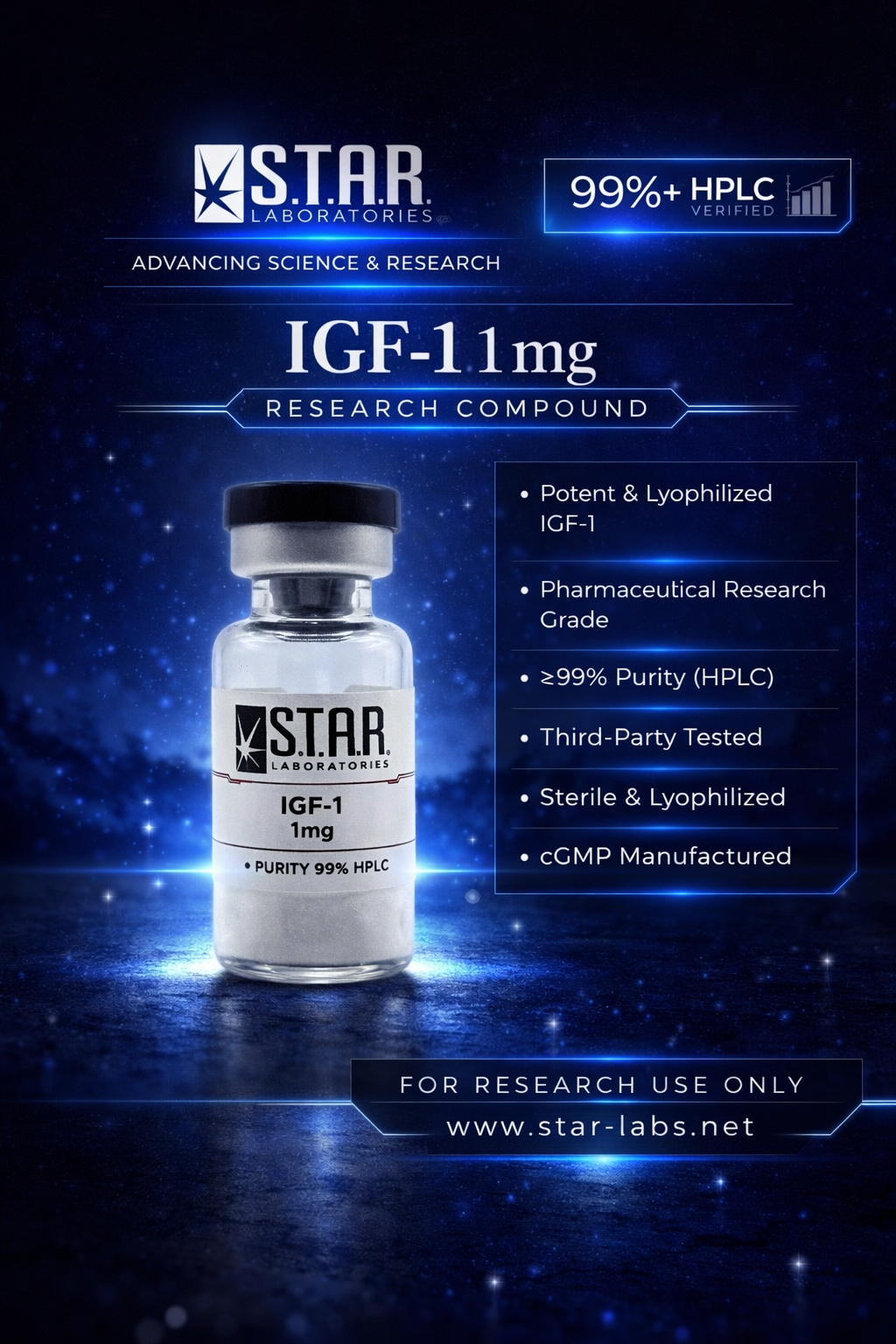

IGF-1 (Insulin-Like Growth Factor-1) is a naturally occurring peptide hormone that plays a key role in growth, tissue repair, and cellular regeneration. It is primarily produced in the liver in response to growth hormone (GH) and acts as one of the main mediators of the body’s anabolic and recovery processes.
IGF-1 supports muscle growth, protein synthesis, and cell regeneration, making it widely studied in research related to performance, recovery, and anti-aging science. It also plays an important role in bone density, metabolism, and tissue repair, helping regulate how cells grow and develop.
In laboratory and research settings, IGF-1 is investigated for its potential impact on muscle hypertrophy, recovery from injury, neurological health, and metabolic function. Because of its powerful biological signaling properties, it is considered one of the most influential growth-related peptides in the human body.
Key Research Areas:
- Muscle growth and recovery
- Cellular regeneration
- Bone density support
- Metabolic regulation
- Neurological research
For research purposes only.